How to Choose a Safe Riverside Campsite: Flood Risk, Access and Leave No Trace
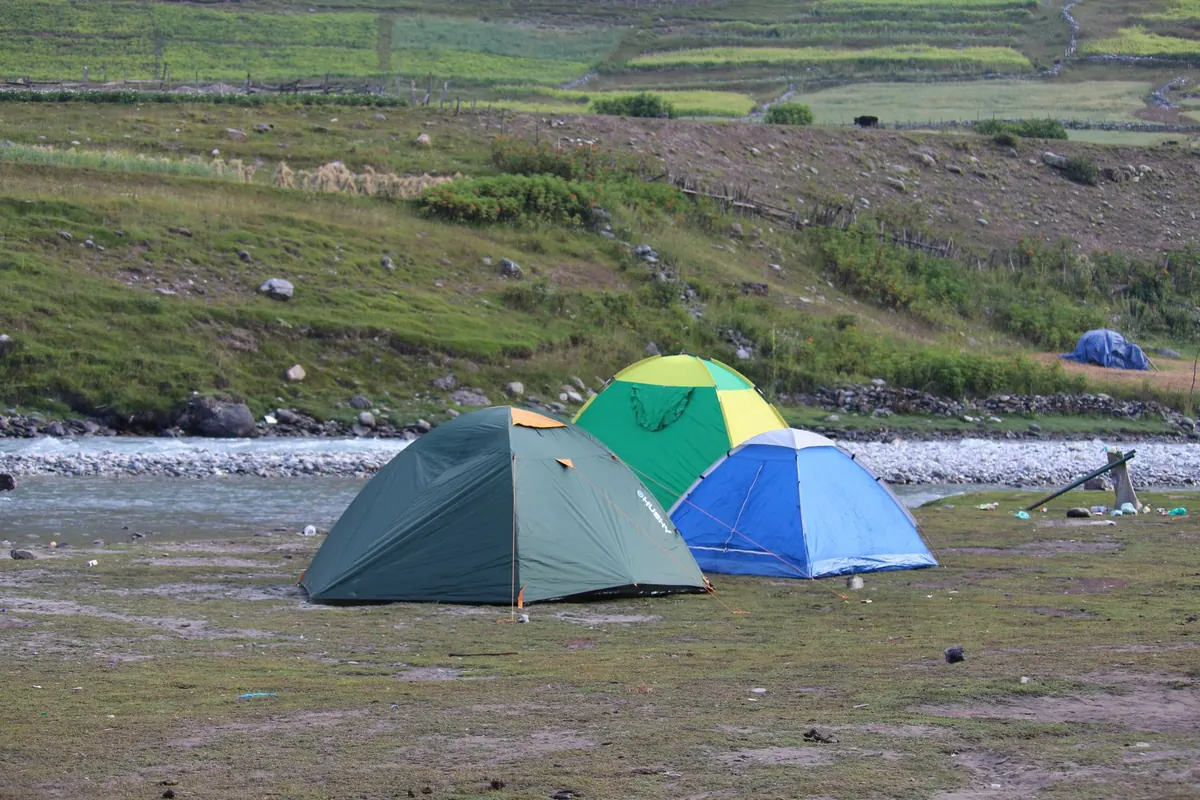
You find the spot an hour before dusk: a flat grassy shelf above a bend, alders leaning out over the current, a ring of stones someone left behind. It looks perfect. Then look again, properly, and you start to see the marks — grass laid flat in one direction, silt caught in the fork of a branch above your head, a scoured channel cutting past a gravel bar. Rivers are honest about their history. They just don't volunteer it.
Choosing a riverside pitch comes down to reading water and weather, then being honest with yourself about what you're willing to risk for the view.
Read the River Before You Pitch
Every bank keeps a record of the last flood. Your job is to find it before you unroll anything.
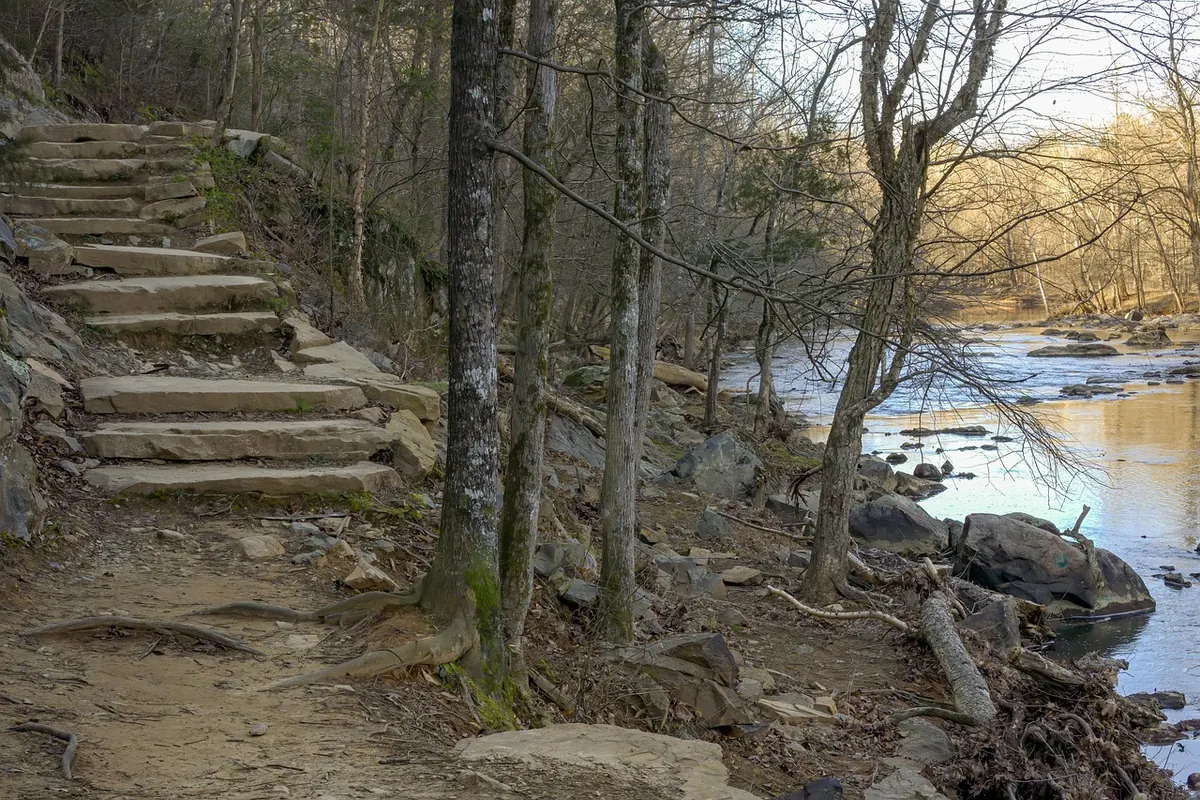
- High-water debris. Grass, twigs and leaf litter tangled in branches are a measuring stick. If that tangle sits at chest height, that is where the water has been — and where it can go again.
- Silt lines on trunks. A dark tide-line on bark marks the last high stage. Pitch well above it, not right on the edge of it.
- Undercut banks. Lean out and look down. If the soil is hollowed underneath, cracked, overhanging or freshly slumped, don't sleep on top of it. Banks like that fail in pieces, usually at night.
- Gravel bars and islands. Lovely at six in the evening, a trap by two in the morning. A rising river swamps bars and islands first, long before it reaches the fields.
- Side streams. A small feeder stream can rise far faster than the main river because it drains a steeper, narrower valley. The junction where they meet is dramatic. It is not where you want your tent.
So move uphill. Leave No Trace guidance suggests camping at least 60 metres — roughly 200 feet — from lakes and streams where the terrain allows. That distance buys you warning time, and it keeps your cooking water, footprints and toilet pit out of the flood zone.
Weather Upstream Matters More Than Weather Overhead
A clear sky above your head tells you nothing about rain that fell ten miles upstream four hours ago. Catchments are enormous, and water funnels downhill into your pitch long after the local clouds have moved on.
Check the forecast for the whole valley, not just your grid square: upstream towns you'll never visit, high ground where the rain actually lands. In mountain country, dry gullies and side valleys can run with water within minutes of a storm. If you're camping below a reservoir, intake or hydro scheme, ask the operator or land manager about release times before you commit to a spot.
Then ask yourself two blunt questions. If the river came up a metre overnight, where would I stand? And: can I get there in the dark, in the rain, without crossing water? If you can't answer both comfortably, walk another fifteen minutes.
Listen to the water as you sleep
A steady gurgle shifting to a hiss, or a deeper roar underneath the usual noise, is worth waking up for. Keep boots, a torch and a waterproof within reach — not at the bottom of a stuffed dry bag. That single habit has saved more unpleasant nights than any gadget.
Access: Find Out Whose Bank You're On
Wild camping rules are not the same everywhere, and riverside land is often more complicated than open hillside. A bank can be a nature reserve, a water company catchment with its own bylaws, common land, a fishing beat someone pays for, or simply a farmer's field.
In England and Wales, camping without permission on private land is generally not a right; in Scotland there are statutory access rights, but they come with responsibilities and exclusions. Details vary by country, region and even by individual site, so treat any general rule as a starting point rather than a guarantee. If you're unsure, ask the landowner, the estate office, the national park authority or the local access team. It takes five minutes and it's the difference between a quiet night and a knock on the tent.
Camping late and leaving early is a common habit, but it isn't a legal shield — and it doesn't help if you've blocked a gate, parked across an access track, or pitched in a field with livestock in it. Keep well away from houses, fishing beats and obvious working areas.
Drainage, Ground and What's Above You
Flood risk is only half the puzzle. A pitch that turns into a puddle at 3am will ruin the night just as thoroughly as a rising river.
- Look for hollows. Flat and dry beats flat and low. Water collects in the slightest dip, and you'll find it with your hip.
- Read the plants. Rushes, sedges, moss and unusually dark green patches all point to ground that stays wet. Short, mixed grass on a gentle rise is usually a better bet.
- Test it with a knee. Press down. If the ground gives and glistens, keep walking.
- Check overhead. Dead branches and cracked limbs hang over riverside pitches — that's what "widow-maker" means. Look up before you commit.
Valley floors also pool cold air, which means dew, damp sleeping bags and midges in still conditions. A slightly raised terrace with a bit of breeze is far more comfortable than the flattest spot on the floodplain.
Leave No Trace at the Water's Edge
Riverbanks are fragile in a specific way: they're soft, they're damp, and they erode quietly until the day they don't. Minimum-impact camping here is mostly about not rearranging things.
Use an existing pitch if there is one. Don't dig drainage ditches around your tent, and don't clear vegetation for a better view. Wash up and brush your teeth at least 60 metres from the water, using as little soap as possible — even biodegradable soap needs soil to break down, not a river. Keep sunscreen, repellent and food waste out of the water entirely.
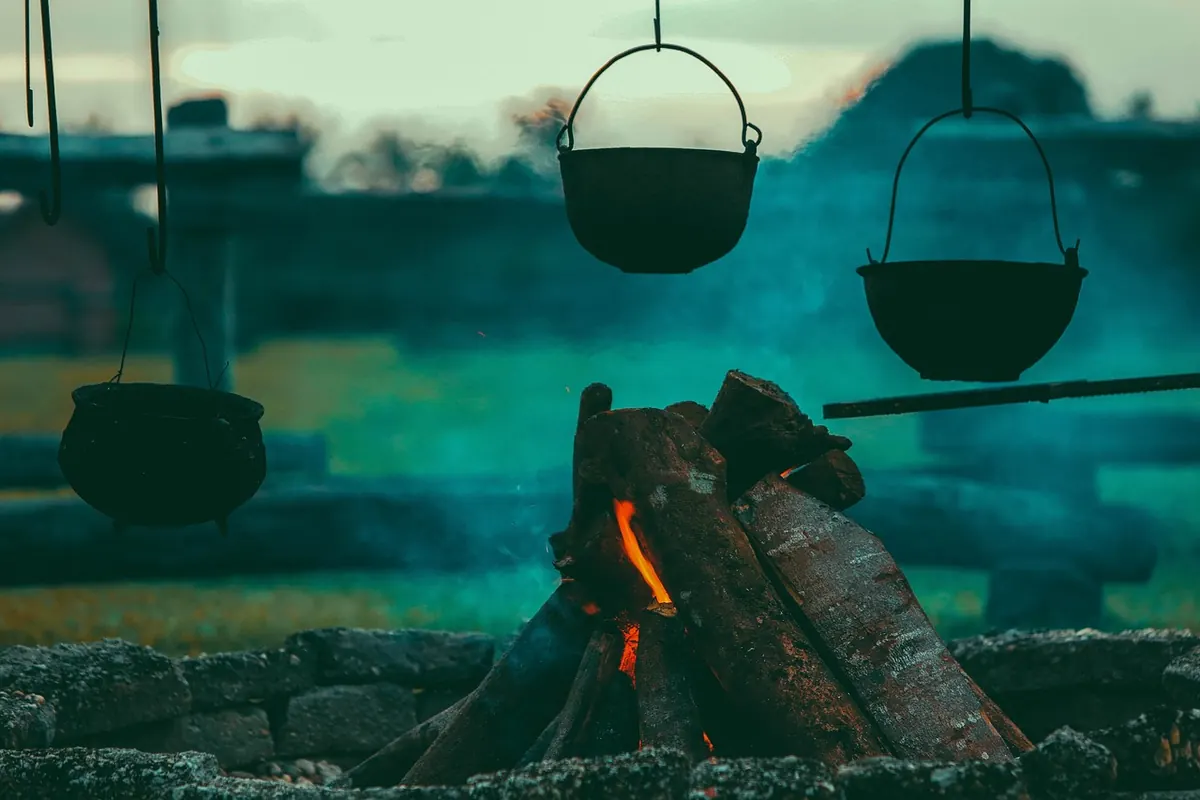
For toilets, dig a hole 15 to 20 centimetres deep, well away from the bank and above the high-water line, and carry out your paper in a bag. Fires are often the biggest visible scar: use a stove by default, and if fires are permitted where you are, keep them small, use an established ring rather than building a new one, and never leave charcoal or half-burnt wood behind. Driftwood piles and stone clusters along a bank are habitat, not fuel.
Take the photograph, not the rock. A riverside pitch that looks untouched when you leave is the one that stays worth returning to.
Ten Minutes Before You Sleep
Once the tent is up, run through this. It takes ten minutes and it separates a good night from a story you'd rather not tell.
- Confirm you're above the high-water line and a sensible distance back from the bank.
- Walk the route to your high ground, even a short one, so you know it in the dark.
- Check the upstream forecast one last time. If rain is due, keep your bag packed and sleep light.
- Put boots, headlamp and jacket by the door.
- Cook and store food away from the tent, sealed against animals.
- Name your backup pitch — a higher terrace, a sheltered bank, the car — so you're not improvising at 3am.
None of this requires special gear or years of experience. It requires twenty minutes of looking before you pitch and the discipline to move on when the ground or the sky is telling you something. Do that, and the river stays what it should be: the reason you came, not the thing you spend the night worrying about.
Photo: Shahid Sultan / Pexels