Winter Kayaking Essentials: Staying Warm and Safe on Cold River Days
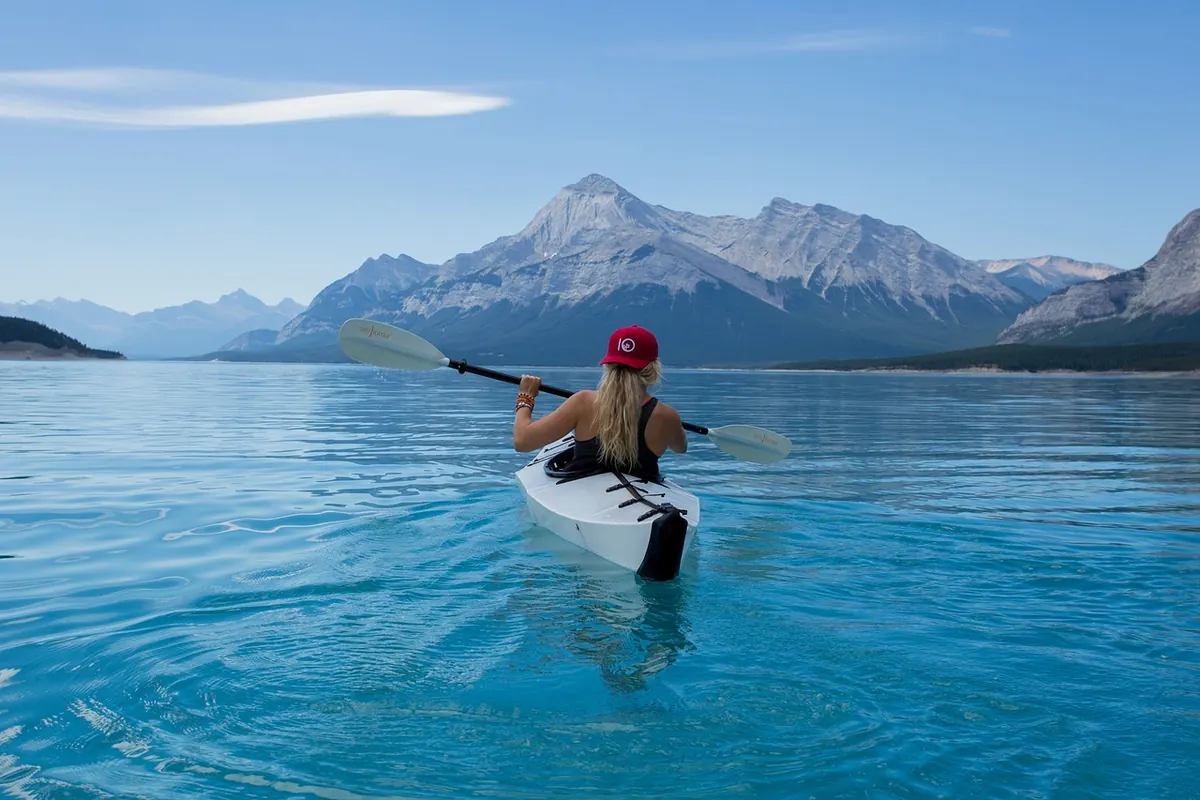
Winter paddling days are some of the best of the year. The river runs quiet, the banks are bare, and there is no queue at the put-in. They are also the days when small mistakes matter more. A capsize in July is an inconvenience; the same swim in January is a different kind of problem, and it starts with the water temperature rather than the air temperature. All of the advice below is about closing that gap: dressing for immersion, carrying kit you can actually use, and choosing a route that keeps a way out within reach of the daylight you have.
Air Temperature Lies to You
A bright, still day in a sheltered valley can feel mild enough that you leave the dry top in the car. The water you are about to paddle has been sitting at winter temperatures for weeks and holds far more cold than the air does. Water pulls heat from a body many times faster than air at the same temperature, which is the whole reason winter paddling is a different sport.
Cold water shock happens in the first minute of immersion. When cold water hits your face and chest, the body reacts with an involuntary gasp and rapid, uncontrolled breathing. If your head goes under, that gasp takes in water. If you keep your head clear, you are still breathing too fast to think straight, and panic finishes the job. Then coordination goes: fingers stop gripping, arms lose strength, and your ability to swim, roll or climb back into a boat falls away quickly.
You cannot train yourself out of the gasp reflex. You can dress for it, and you can decide in advance what you will do. Float on your back with your head clear, keep your hands still, and breathe out slowly until the first surge passes. Signal, then move. The paddlers who handle cold immersions well are the ones who bought themselves time before they needed it.
Layering for a Cold Day on the Water
Dress for the swim, not for the car park. That means thinking in layers that still work when they are wet.
- Base layer: merino wool or a synthetic thermal. Leave cotton at home. It holds water against your skin and insulates almost nothing once it is soaked.
- Mid layer: fleece or wool, thicker than you would wear for a summer paddle. A one-piece fleece suit or salopettes avoid the cold gap at your waist when you are sitting in a boat.
- Shell: a dry top with latex wrist and neck gaskets over your layers, or a full dry suit. For winter river running, a dry suit is the sensible default.
- Feet: neoprene booties sized to fit a wool sock inside, or dry suit socks with roomy booties over them. Tight boots cut circulation and cold feet follow.
- Hands: pogies beat gloves for paddling. You grip the bare shaft, your hands stay warm, and you keep the dexterity you need for a rescue.
- Head: a neoprene hood, or a wool hat under your helmet. A surprising amount of heat leaves through an uncovered head.
Dry Suit or Wetsuit?
A dry suit keeps water out entirely, which is why it is the standard choice for cold rivers. Check the gaskets before every trip; a split wrist seal turns a good day into a wet, cold one. A wetsuit works by trapping a thin layer of water against your skin, and it insulates while wet, but in genuinely cold water a thick suit still leaves you chilled during a long swim. A wetsuit plus a paddle jacket is reasonable for a short session on shallow water with a bank you can stand up in and someone watching. It is a poor plan for a committing downstream run.
The Safety Kit Worth Carrying
Winter kit is less about volume and more about redundancy. Take two ways to solve most problems.
- PFD worn properly and adjusted, not stowed behind the seat.
- Helmet on anything rocky or fast.
- Throw bag with a line long enough to reach across your river, and the practice to throw it.
- Spare paddle or a breakdown paddle strapped to the deck.
- Headlamp with spare batteries. Winter afternoons end early.
- Whistle on the PFD, and a phone in a waterproof pouch.
- Small repair kit and a roll of strong tape.
- Flask of something hot and food you will actually eat.
- A dry bag with a full change of clothes, hat, gloves, shoes and a warm jacket, left at the takeout.
Plan the Route Around Daylight and Levels
Your summer route is not automatically a winter one. Daylight is short, so pick a stretch you can paddle comfortably in the hours you have, and give yourself a buffer. A nine o'clock put-in with a three o'clock takeout is a generous window; a two o'clock put-in is a plan for finishing in the dark.
Check the river gauge and the rain forecast the night before and again in the morning. Winter rivers rise fast after rain on saturated ground, and a level that felt friendly last week may be pushing through trees today. If a rapid looks different from the bank than it did from your sofa, walk it.
Look at the wind as well as the current. On open water or a broad valley, wind can cost you more energy than the flow gives you, so if you are doing an out-and-back, head upstream first and come home with the wind behind you. Note your escape points: bridges, laybys, footpaths. Ice shelves along the bank look solid and are not. Treat them as hazards rather than as eddies, and stay clear of anywhere the current runs under a frozen surface. Tell someone your route and your expected finish time.
Breaks, Takeouts and the Signs to Stop
Eat and drink before you feel hungry or thirsty. Cold drains energy quietly. On a break, get out of the wind, add a layer rather than removing one, and keep the flask for the moment you actually need it.
Know the signs that you or a paddling partner are getting too cold: shivering you cannot control, fumbling with zip pulls and buckles, slurred speech, unusual quietness or confusion. Shivering that stops is not a good sign. If any of this shows up, get off the water, get into dry layers, and warm up slowly. If someone is seriously cold or their condition worries you, treat it as a medical emergency and seek professional help.
A Short Checklist Before You Push Off
- Gaskets, seals and zips checked on your dry gear.
- PFD and helmet on and adjusted.
- Spare paddle, throw bag, headlamp and phone within reach.
- Dry change of clothes waiting at the takeout.
- Gauge checked, forecast checked, plan shared with someone at home.
- Turnaround time agreed out loud with your group.
Winter paddling rewards a bit of preparation more than any other season. Get the layers right, carry the kit, shorten the plan and start early, and the cold months give you quiet water and empty car parks while everyone else waits for spring.
Photo: thatsphotography / Pixabay