Hiking the Wye Valley Walk in Sections: Best Day Routes for Weekend Walkers
The Wye Valley Walk runs roughly 136 miles from Chepstow to the slopes of Plynlimon, following the river through limestone gorges, water meadows, cider country and, eventually, empty upland Wales. Walking the whole thing takes a fortnight most of us don't have. The good news is that this route chops into day-sized pieces better than almost any other long-distance path in Britain, because there is usually a town, a bus stop or a pub within a few miles of wherever you decide to stop. Here are the sections that earn their place on a weekend.
Why the Wye Valley Walk suits weekend walkers
The path is waymarked throughout and the river does most of the navigating for you. The lower half, between Chepstow and Hereford, is mostly gentle: riverside terraces, old railway trackbeds, field edges and a few short, sharp climbs to viewpoints. Above Hay-on-Wye the going gets rougher and the valley emptier, so save that for when you have full days and reliable legs.
Towns appear at useful intervals, and several of them have railway stations. That combination of a linear route with public transport at both ends is what makes section walking possible without relying on lifts from patient friends.
Section 1: Chepstow to Monmouth
This is the classic introduction and the busiest stretch, for good reason. Chepstow has a railway station on the Gloucester to Newport line, and buses follow the A466 up the valley through Tintern, so you can pick your finish point and still get home.
Chepstow to Tintern, about 5 miles
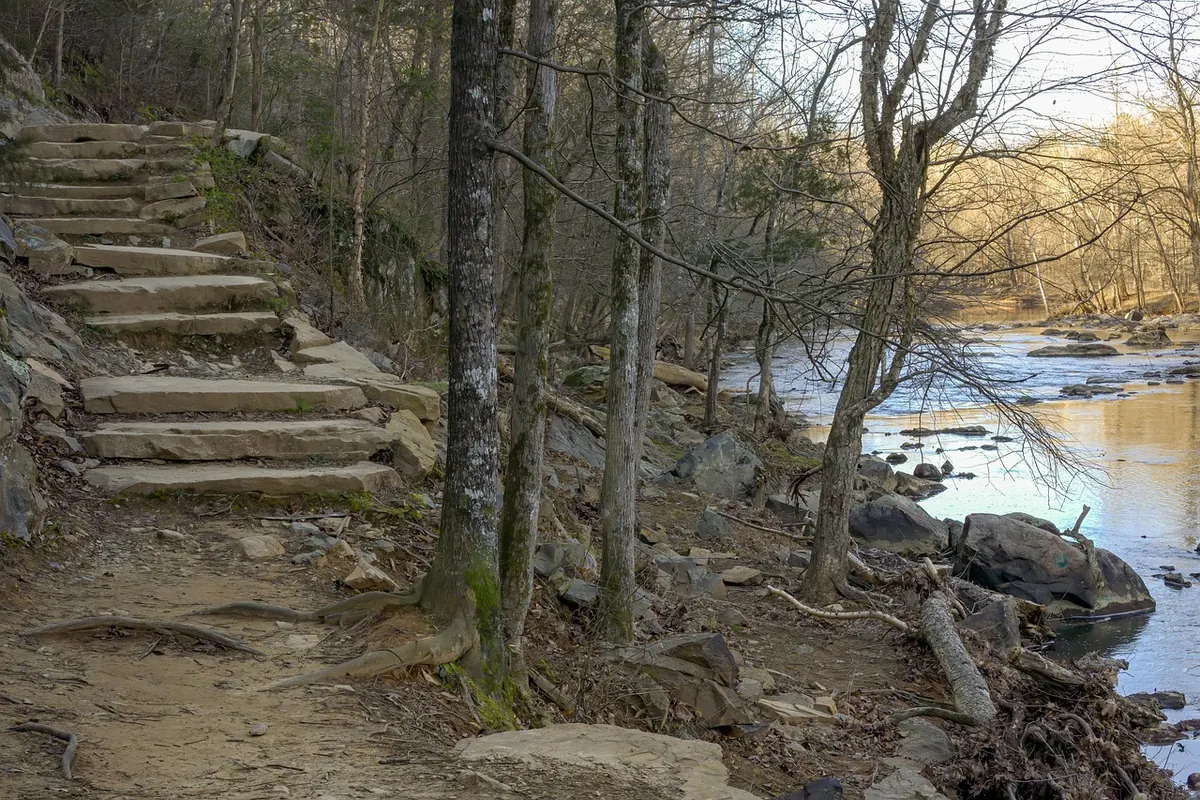
An easy half day. The path climbs away from Chepstow Castle through woodland above the Wye, drops to the riverbank and then follows the old wireworks tramway into Tintern. You get the abbey ruins from above before you reach them, which is the best introduction to the valley you could ask for. Pubs and cafés in Tintern, and a bus stop on the main road.
Tintern to Monmouth, about 12 miles
A full day and a genuinely good one. You cross to the west bank, pass through Brockweir and its community shop, then track the river to Redbrook and on into Monmouth. The final approach through the meadows below Dixton is lovely on a summer evening. Monmouth has no railway station, so plan on the bus or arrange a lift.
Section 2: Monmouth to Ross-on-Wye
About 15 miles, and the most dramatic section of the whole walk. From Monmouth you climb to the Kymin, then drop and climb again towards Symonds Yat Rock for the famous bend in the river. From there the path runs past Goodrich Castle and along the gorge to Kerne Bridge before easing into Ross.
Split it at Symonds Yat if 15 miles feels greedy. The riverside at Symonds Yat East has pubs, and a hand-pulled ferry crosses the river when it is running, which makes a satisfying shortcut. Ross-on-Wye has plenty of pubs, cafés and buses, though no station.
Section 3: Ross-on-Wye to Hereford
Roughly 17 miles of quiet, flatter walking through meadows and orchards. This is the section people skip, and they shouldn't. It lacks the drama of the gorge, but you get big skies, old cider country and villages such as Fownhope where the pubs are within a few yards of the path.
There is no obvious halfway transport, so either commit to the full day into Hereford, where the railway station solves everything, or cut the day short with a taxi booked in advance.
Section 4: Hereford to Hay-on-Wye
About 20 miles, best treated as two days. Hereford has a station. The route leaves the city along the river, then passes through the Wye's wide meanders near Byford and Bredwardine, where the bridge and the church above it are worth the small detour.
If you are splitting it, look at accommodation around Bredwardine or Letton and treat the walk as two relaxed halves. Hay itself needs no introduction: bookshops, pubs, and a hill behind the town that rewards anyone with an hour to spare.
Section 5: Hay to Builth Wells and the upper Wye
Beyond Hay the walk changes character. Fewer stiles, more sheep, longer climbs and stretches where you see nobody for an hour. Hay to Builth Wells is around 20 miles and can be broken near Erwood or Llyswen. Builth has no station, so buses or a car shuffle are the practical answer.
The final miles to Plynlimon are for fit, experienced walkers with map skills: boggy, exposed and remote, with no easy escape. Do those as a dedicated trip, not as an afterthought at the end of a Sunday.
Transport: the part that decides your route
- Rail: Chepstow and Hereford are the two reliable stations on the route. Llandrindod Wells, on the Heart of Wales line, is useful for the upper section with a taxi.
- Bus: Monmouth, Ross-on-Wye, Hay-on-Wye and Builth Wells are all served by buses, but services are thin on Sundays and change with the seasons. Check timetables the week before, not on the morning.
- Two-car shuffle: Still the simplest option for awkward sections. Park one car at the finish, drive back to the start.
- Taxi: Worth booking ahead for short hops between villages where no bus runs.
Planning a weekend: five steps
- Pick a section with a station or a town at one end, then work out the return leg before you book anything.
- Choose accommodation within walking distance of a pub. You will not want to drive after a full day on the riverbank.
- Decide your bail-out point: a village, a bridge or a bus stop you can reach if the weather turns.
- Check the river level and any path diversions. Flooding closes riverside stretches, and the Wye rises quickly after heavy rain in the hills.
- Pack for mud and roots rather than a stroll: proper boots, a map, water and a spare layer, even in July.
Before you set off
Take an Ordnance Survey map at 1:25,000 for the section you are walking, and carry it even though the waymarking is good. Mobile signal drops in the gorge and on the upper stretches. Keep dogs on leads around livestock and near ground-nesting birds in spring, and shut every gate you meet.
Riverside pubs and cafés can close without warning, so carry food and water rather than assuming a lunch stop will appear. If you are walking solo in the remote upper section, tell someone your route and expected finish time. And if you are planning anything involving the water itself, remember the Wye is a big, cold, fast river: treat swimming or paddling with real caution and take local advice.
Start with Chepstow to Tintern on a grey Saturday and you will understand the appeal quickly. By the time you reach Symonds Yat Rock, you will be plotting the next weekend on the drive home.
Photo: JoshuaWoroniecki / Pixabay